What if …?

Often it is useless to ask: ‘what if’?’ but I thought I’d indulge in a little speculation as Jochen Hemmleb’s and my book The Everest Mystery is launched in the United States and Canada. Working with Jochen has been a fantastic collaboration and it has left us both with residual curiosity about the fate of Sandy Irvine and George Mallory. For Jochen there are still unanswered questions about the final climb. For me there is an appetite to delve deeper into our research about Sandy’s life and personality and to ask that question: what if he had returned from Everest?

With my knowledge of our family history and with the few hints he dropped in the last year of his life I feel I have some understanding of who he was and what he might have become. Had he returned in 1924 he would have arrived in Britain in August, six weeks before the start of the autumn term at Oxford. If he and Mallory had succeeded in reaching the summit of Everest, they would have become national heroes, and Mallory’s life would have changed out of all recognition. His dream fulfilled, he would have had the fame to make a career out of his success and to give Ruth, his wife, the life she and the children deserved. Sandy, too, would have found fame but it would have been limited by his age and his need to complete his education. The idea of a professional climber or explorer lay years in the future and sponsorship for a lifestyle was not invented until the seventies. Had they not succeeded but nevertheless held the altitude record for this highest climb on Mount Everest to date, that would still have had some impact on their standing.

So either way, summit or not in his bag, Sandy would have come back to Britain and spent most of the summer with his family in Birkenhead or in the Lake District. In October he would have caught the train to Oxford for his final year studying Chemistry at Merton College. His friends would have welcomed him back into the Boat Race squad and he would have been in the running to become president of the all-important Oxford University Boat Club. The crew raced again in 1925 and sank. The weather was atrocious and their boat became waterlogged. Cambridge clocked up yet another victory. I don’t believe Sandy’s presence in the boat or his leadership of the club could have overturned that result, but he would have given it his best.

Sandy Irvine in his rowing scarf, 1923 The Warden & Fellows of Merton College, Oxford

Life after Oxford was always going to be a challenge for Sandy. His love affair with Marjorie was still a live issue. Harry Summers had made it clear he would have to cite Sandy in the divorce proceedings against his wife and that disgrace would have hung heavy over the then twenty-three-year-old. My best guess is that he would have been gently encouraged to leave the country until things died down, not least to avoid bringing embarrassment on his sister, Evelyn, who was about to marry Dick Summers, Harry’s youngest son. So a career abroad might have been an option. George Binney, who had led the Spitsbergen expedition in 1923 and was a friend and fellow Mertonian went to work for the Hudson Bay Company. Sandy might well have found an opening there and with his Everest fame in his pocket he would have been welcomed.
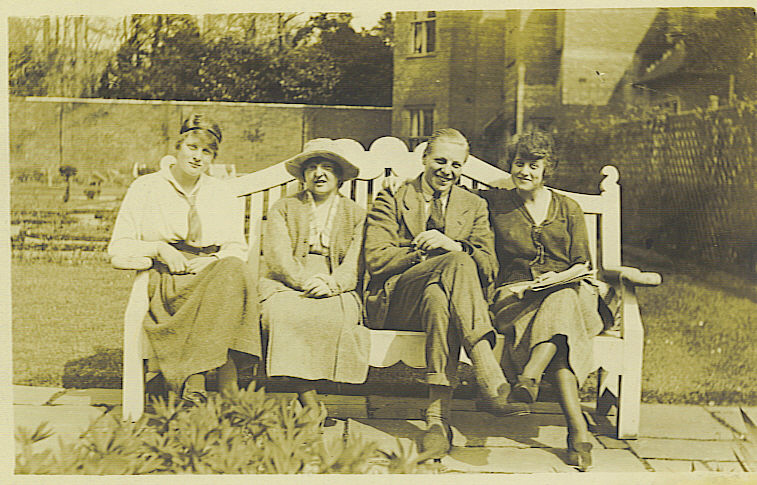
Sandy with Marjorie (right) at Harry Summers’s home, Newbold. Far left is Sandy’s sister, Evelyn, and next to her, Maud Summers, Harry’s daughter and Marjorie’s stepdaughter, April 1923. The Warden and Fellows, Merton College, Oxford

The magnificent landscapes and mountains of Canada and North America would have been a playground for our adventurous spirit. He left us a clue about this in his letter to Arnold Lunn from January 1924 when he wrote: ‘When I am an old man I will look back on Christmas, 1923, as the day when to all intents and purposes I was born. I don’t think anyone has lived until they have been on ski.’ I think that, more than anything else, gives us the clue into his passion for adventure but, and this is important, not necessarily mountaineering. Skiing in North America would have offered him a marvellous opportunity to get into the sport but also to do some proper winter exploration in the back country. Had he been invited to join an expedition to Everest in the late 1920s I suspect he would have accepted. By 1933, when the next British expedition launched, I believe his interests would have moved on elsewhere. He was not a man to look back over his shoulder. It’s just a hunch and Jochen agrees with me.
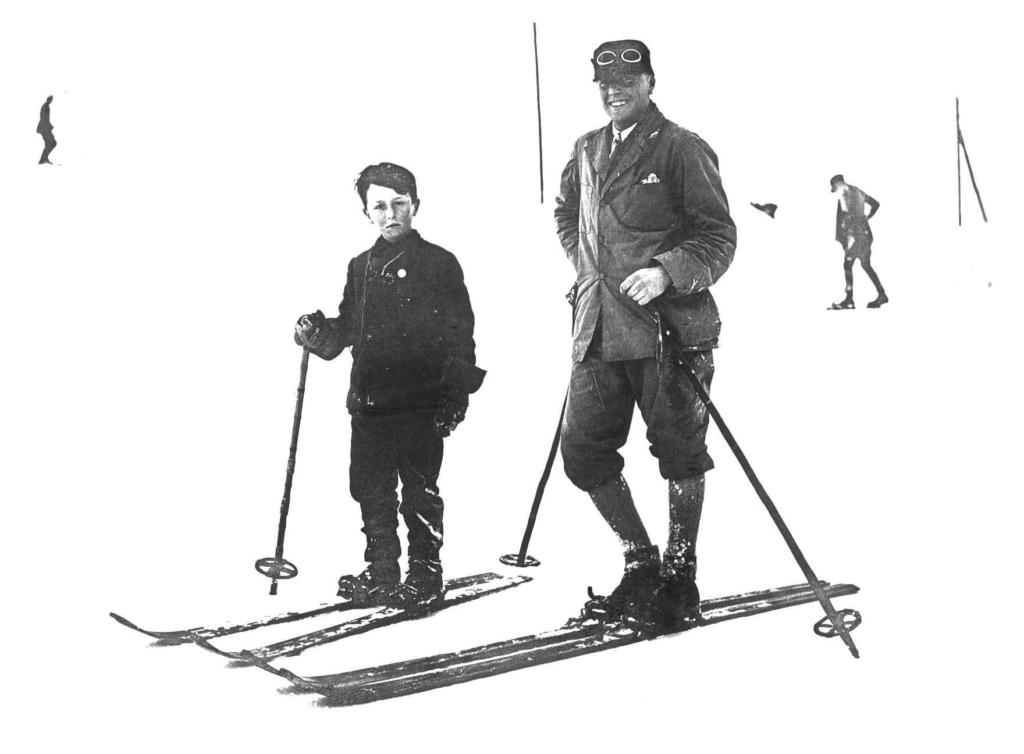
Sandy (right) with nine-year-old Peter Lunn, Murren, Switzerland, January 1924. Peter went on to be an Olympic skier and tested skis for various companies into his nineties. Lunn Family

Of one thing I am confident, Sandy Irvine would have gone on finding engineering solutions to any number of problems. I hope it would have taken him towards a life of invention and investigation because his problem-solving brilliance would have been hugely valuable during the Second World War. I’m fairly sure he would have wanted to come back to Britain to ‘do his bit’ as the expression goes. Harry Summers died in 1940 and it was sixteen years since the scandalous divorce so that would not have been an impediment.
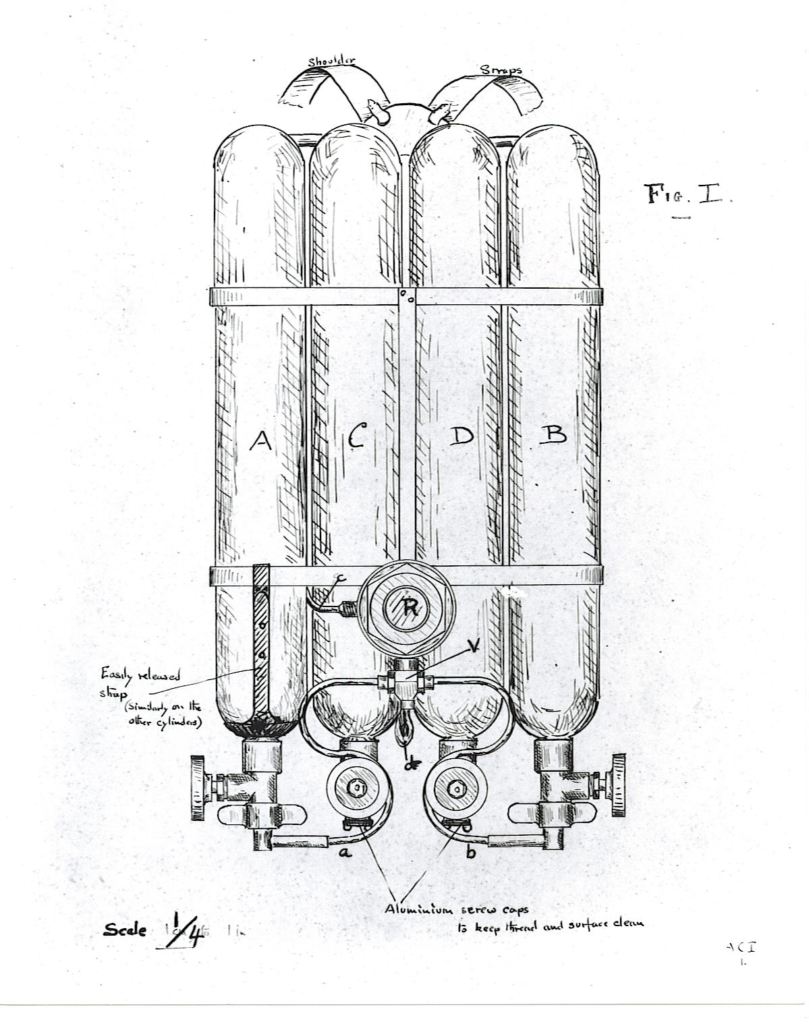
Sandy’s radical redesign of the oxygen apparatus for the 1924 expedition. The Warden and Fellows of Merton College, Oxford

Would Sandy have married? Unlikely but possible. I suspect if he did marry it would not have been to Audrey Pym, his adolescent sweetheart. His life would have led him out of her orbit as he set off west. He would definitely have been the most popular uncle in the Irvine family and one whose stories, told in his quiet manner but accompanied by his twinkling eyes and ready smile, would have enchanted children for many years. After all, his life has done that although it was cut short at twenty-two. Just imagine how many more tales we would have had to enjoy had he lived to become an old man.
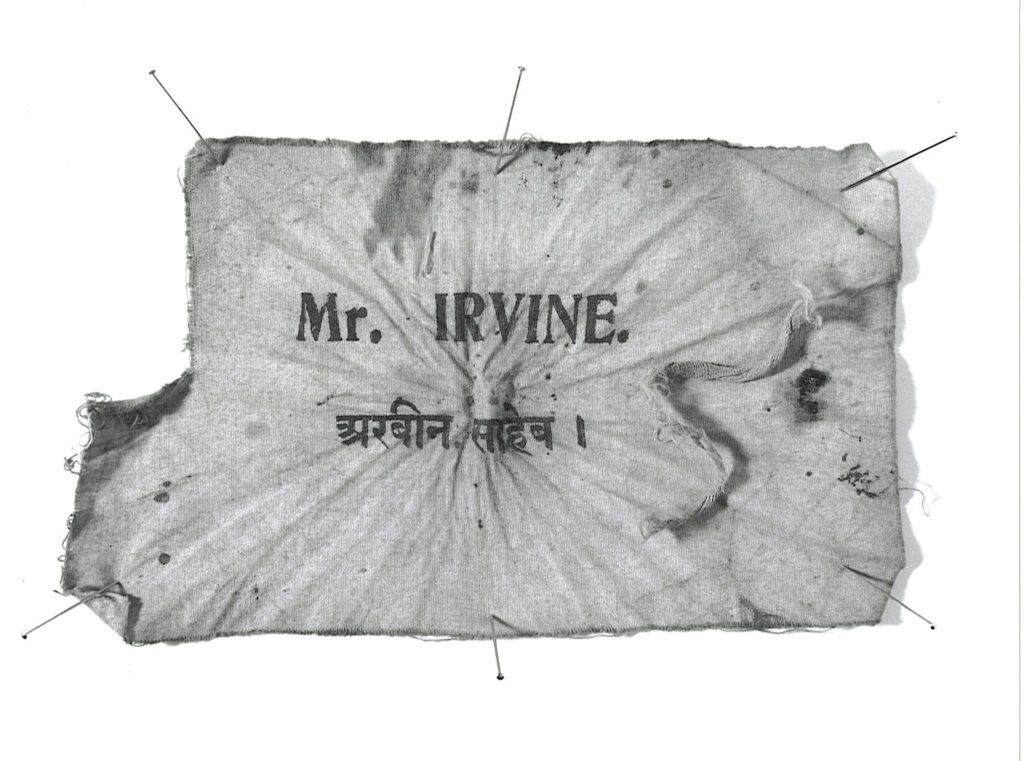
This piece of fabric was sent back to Sandy’s sister, Evelyn, in 1931. In it were 31 garnets collected by Sandy’s sherpa from 1924. The Warden and Fellows of Merton College, Oxford

So while our book is finding its feet on bookshelves in shops, and hopefully homes too, we would like you to imagine that you can get to know Sandy Irvine and perhaps have your own ideas about what might have been had he made it home safely in 1924.

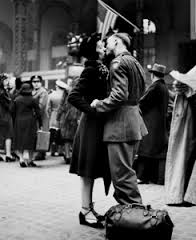
Home Fires Season 2 Episode 4 Love and Sex in Times of War

‘If you put men and women together in close proximity in a danger shared, a mutual attraction is not only the inevitable result, it is what we should expect, and we should be very surprised and perturbed from a national point of view if it wasn’t.’ Thus wrote the English novelist, Barbara Cartland in 1945. As a welfare officer for the women’s services during the Second World War she was warm, generous and young people responded to her: ‘No one has ever minded when I have talked to them, and I’ve been both personal and intrusive. Being a novelist helps. I don’t know why, but people always want to confide in novelists, and the other thing which I believe makes everything alright is the fact that I am sincere. I do believe what I say.’ There were those in society who judged young people who got into trouble and condemned them but Cartland thought that was unfair and wrong. They were young, in love, in danger and in a hurry.

images

From today’s perspective it is difficult to imagine or understand the stigma caused by extramarital affairs or illegitimate children. For both men and women during the war there was a sense that living for today was fine because tomorrow you might die and this spilled over into behaviour which to some seemed reprehensible but which to others was inevitable and not even particularly surprising. ‘War Aphrodisia’ was traditionally ascribed to men in battle and was a well-recognised condition. In total war, as the Second World War undoubtedly was for Britain and mainland Europe, a hedonistic impulse reached many other segments of society. Later in the war the American GIs turned many heads and over 60,000 GI brides made their way to the New World in the immediate aftermath of the Second War. But that is all in the future.

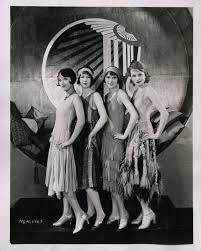
The emancipation of women in Britain after the First World War had led, briefly, to a more liberated attitude towards fashion and behaviour. One commentator wrote: ‘Women bobbed their hair, donned short skirts, smoked in public and wore the heavy makeup which had formerly been the attribute of the harlot.’ The seeds of emancipation had been sown and the flame was fanned hardest in the USA where the combination of a buoyant stock market, bootleg gin and the racy novels of F. Scott Fitzgerald fuelled the frenetic pace of the social revolution.

imgres
‘Jazz babies’ in Hollywood, 1927

Hollywood played its part, producing erotic films for a mass audience and elevating the leading stars to almost legendary status. Audiences flocked to films such as Alimony (1917), which promised ‘brilliant men, beautiful jazz babies, champagne baths, midnight revels, petting parties in the purple dawn, all ending in one terrifying climax that makes you gasp.’ The Great Depression put a stop to much of this and divorce rates in Britain plunged along with the stock market, reaching a low in 1933, down 40% from the 1928 level. The number of weddings also fell.

The circumstances of total war changed both attitudes and opportunities: ‘We were not really immoral, there was a war on,’ explained one British housewife. The ‘what the heck I could be dead tomorrow’ attitude of some of the fighter pilots, for example, brought many couples together and hastily arranged marriages, with often only forty-eight hours to spend together, were not uncommon. Few couples could consider what would happen after the war, when life might return to normal. They lived for that day and perhaps the next. ‘They were loved and beloved, and by this stage in the war love was about the only thing left unrationed.’

Unit stills photography
copyright ITV

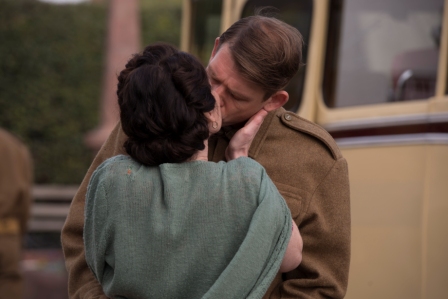
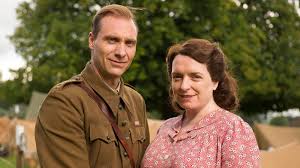
As we dig deeper into the fourth episode of HOME FIRES, war aphrodisia has reached Great Paxford. Electric tensions spark and shock around the village in the ferment of high drama. Pat’s nascent relationship with Marek has caused gasps and quickening heartbeats not just for careful observers like Erica, but for the rest of us watching on, agonising over her every move, desperate for her to duck and dive to avoid the eagle eye of Bob. How can she be so brave as to carry on her relationship with Marek while her deeply troubled husband is trying to exert his influence over her?

imgres

A contemporary description from a Manchester housewife in 1944 might throw some light on this: ‘There was nothing cheap about our affair, and if Rick had my body, my heart was with my husband and somehow I didn’t feel that I was doing anything wrong.’

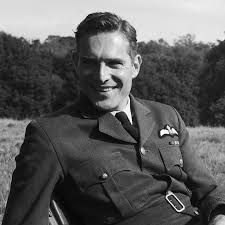
Other relationships stop and start. Emotions that would normally have been ignored or suppressed, rise to the surface with a juvenile and intoxicating urgency. Some women find themselves almost out of their depth and exert a rigorous check on their emotions. Thanks to an intervention by Joyce Cameron in the last episode, Sarah Collingbourne is brought to an abrupt halt in her dalliance with the delightful, handsome and oh-so-eligible Wing Commander from RAF Tabley Wood.

51ea4064a03189e4f35d1562bb0511b2

But what of Miss Fenchurch? She might have danced with him at the Czech Camp but is there a chance of something in the future? Is Laura Campbell’s reputation going to blot out the early signs of love with Tom, the handsome young pilot who nobly stands up to the prissy but not-above-buying-black market-butter, Mrs Talbot? This fetid atmosphere of possibility belongs, of course, in a 9pm drama in 2016, but it accurately reflects the intoxicating atmosphere of the summer of 1940 when no-one knew what might happen next. The Second World War had entered a phase of unprecedented high stakes and it is not surprising that people reacted to it by questioning their tomorrow.

I am constantly excited and delighted by Simon Block’s brilliantly observed scripts. He has succeeded in chiming with the changing times. The pace of this series increases as the pace of the war did too. We never quite know what turn is to come next but when it comes it is both thrilling and fitting. Robert Quinn’s outstanding directing never lets us rest for a minute, yet it is not hurried. We are on the edge of our seats, as the country was in 1940. Home Fires is an all-round production with an exceptional cast, a superb production team and an energetic editorial and post-production set up that weaves the magic together as Samuel Sims’ music sprinkles the icing on the cake. Enjoy Sunday 23 April. It is a mesmerising episode.

The first section of this blog appeared in the USA in October 2015 and is an abridged version of a chapter in Stranger in the House, entitled Sex and Love in Times of War.

cover Home Fires full 6.24.15


Celebrating Home Fires Season 2 on PBS

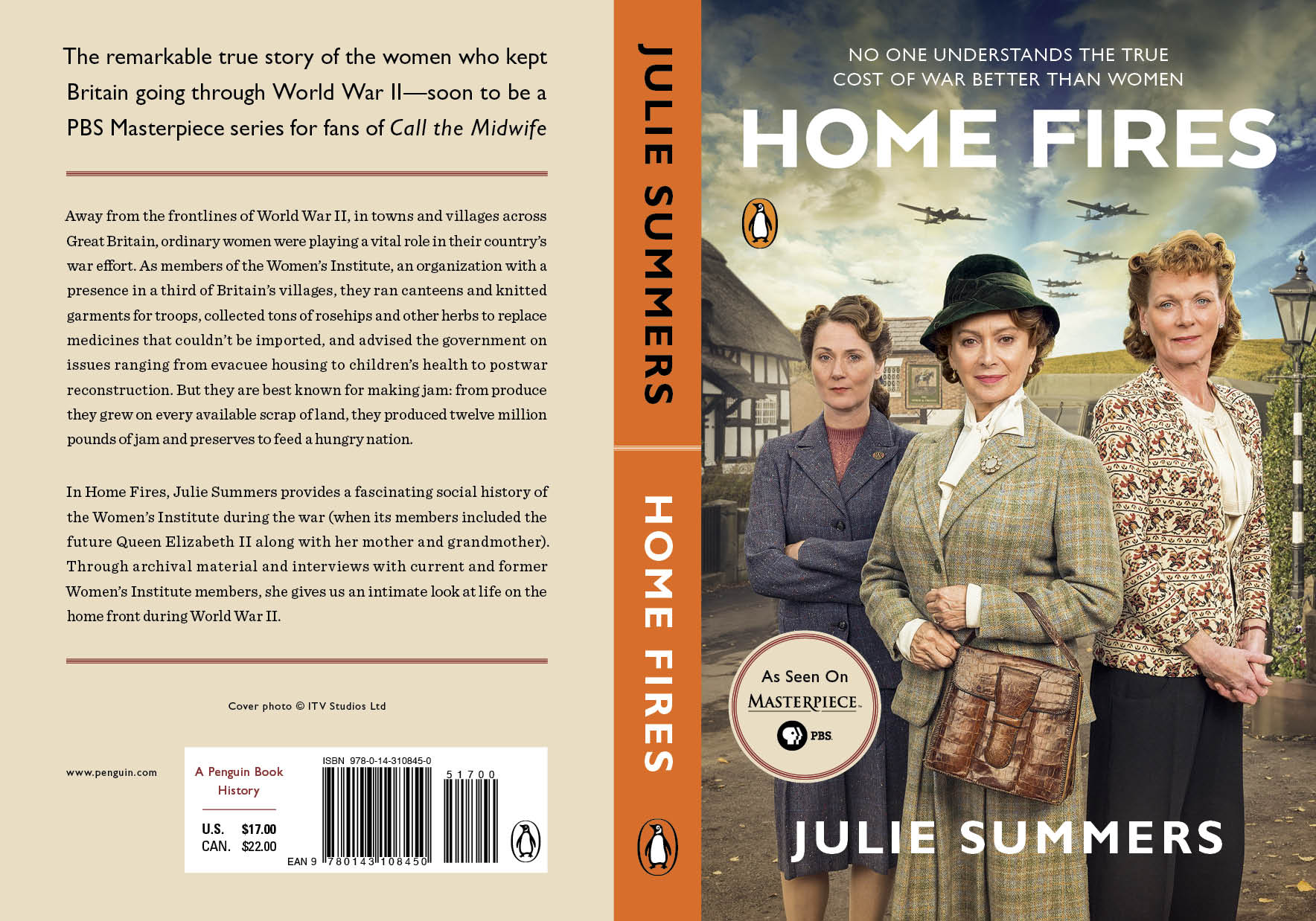
SignpostSeason 2 of Home Fires, the British drama series about life on the Home Front during the Second World War, is about to air again on PBS starting Sunday 2nd April. As the drama moves forward in time I thought it would be useful to give a little background to the historical period against which it is set. The summer of 1940 was the most dramatic of the Second World War for the British population. It was the moment when the country believed it would be invaded by the Germans. It was a full eighteen months before the USA would enter the war and the feeling of vulnerability was profound. Families flocked to send their children to safety in the USA and Canada, believing they would be safer there, despite the risk of U-Boat attack in the Atlantic. The country was on edge. Everyone held their collective breath.

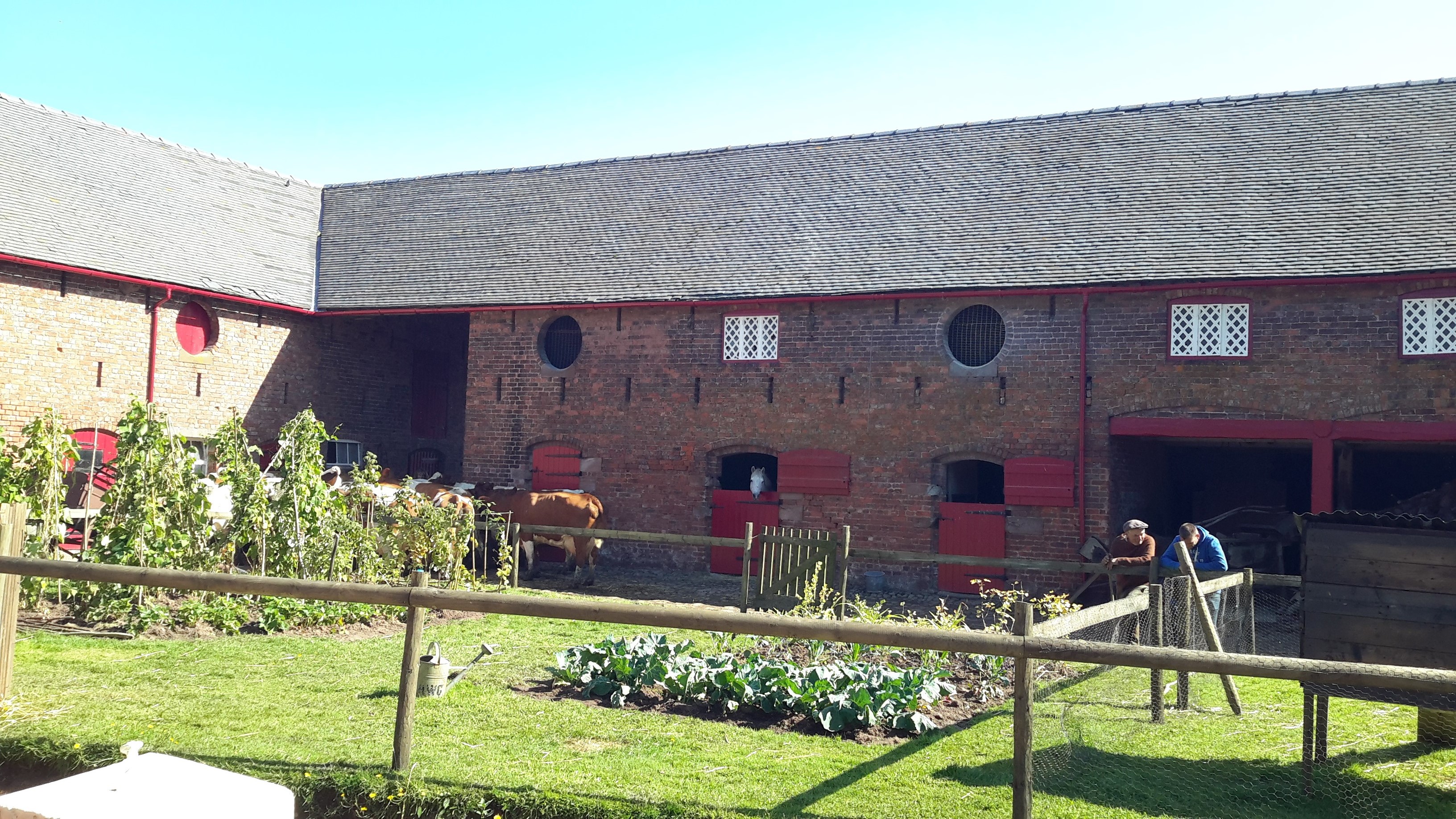
20140902_110031

It is key to understanding series 2 of Home Fires that although we know the outcome of the war, the villagers in Great Paxford do not. They believe, as even Churchill did, that invasion was imminent. When we left Great Paxford at the end of series 1 the villagers all stood on the street, spell-bound by the sight of hundreds of aircraft flying south. The so-called Phoney War had come to an end and the real war was about to begin.

In fact, by the time those planes were flying south, Hitler’s troops had already invaded Denmark and Norway. The British Expeditionary Force had been guarding the Maginot Line for the last nine months but was woefully unprepared for what was to come. On 10th May 1940 two things happened that changed the course of the Second World War: Hitler launched the Blitzkrieg against France, Belgium and neutral Holland, and in Britain Winston Churchill became Prime Minister. For two weeks the BEF and its Allies fought to hold out against the German onslaught but towards the end of May it was obvious that they had suffered a humiliating defeat and Churchill ordered a retreat. The familiar story of Dunkirk now unfolded. Hundreds of boats, ships, barges and tugs were sent to the rescue and over 330,000 British and Allied soldiers were picked up from the beaches of Dunkirk over a period of several days.

dunkirk

My grandfather was pulled out of the water by a Thames barge on 2nd June and brought back to Southampton by ship. ‘The sailors who dried our clothes pinched all our buttons and insignia but we were so relieved to be safe we didn’t bother about it.’ The following night he was reunited with his wife, Alex: ‘It was one of the strangest contrasts of the war. One night I was standing up to my neck in water with very little chance of rescue and the next I was eating dinner with my wife in the Midland Hotel in Manchester.’

Three weeks later France fell and Britain stood alone. A brilliant piece in the New York Times from July 1940 summed up the situation in Britain seen from the other side of the great Atlantic Ocean:

The folk, old towns of Britain, the hills and cliffs and shores and meadows, rich with history, the homes and lives of forty-five million people, the great British traditions of human worth and dignity, the folk sayings, the deep wisdom and the long-suffering hopes of a race – these, not being pleasing to Hitler, are condemned…
From our own shores we cannot see the shadow over ancient gardens, over houses hoary with age, over the graves of poets and philosophers, and the tombs of the martyrs. We know only that one of the green and lovely oases of civilisation in the wilderness of man’s time on earth, is foully threatened and that the whole world for evermore will be the poorer if it falls.

I will write a blog each week to introduce the coming episode. No spoilers, I promise, but I hope some background detail can add to the enjoyment of the series.

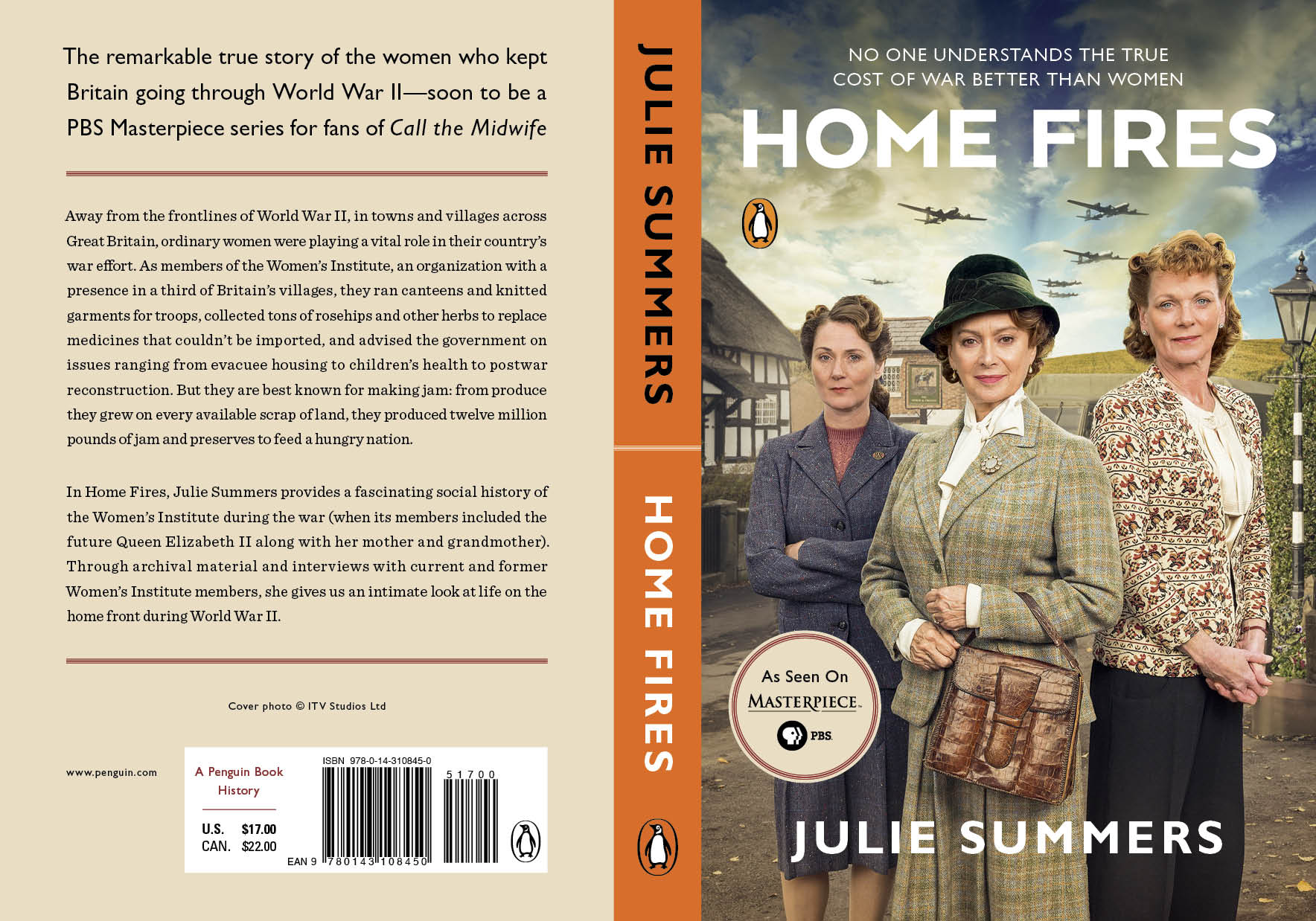
Home Fires is written by Simon Block and inspired by my book of the same name. My book is non-fiction so you won’t find the stories of Frances Barden, Joyce Cameron or Alison Scotlock in the book but you will be able to see the true story of the women who inspired Simon Block’s compelling characters.

See the much-anticipated final season of this beloved series on Sundays, April 2nd – May 7th, 2017 at 9/8c on MASTERPIECE.

cover Home Fires full 6.24.15